There are questions business owners can spend weeks carrying around in their heads. How do I become more visible without exhausting myself? How do I talk about what I do without making every message sound like a crisis? Where is the fastest path to revenue? Is it time to hire, automate, or keep doing the work myself?
Those questions rarely have one universal answer because the right decision depends on the business, the audience, the resources available and what is already working. That was the thinking behind the first Bloom Connections Business Clinic, co-hosted by Latifah Abdur and Amanda Tayte-Tait. Rather than choosing one topic for the week’s Educational Moment, questions submitted by women in the community were grouped into four areas: marketing and visibility, messaging and positioning, sales and revenue, and team, operations and foundation.
The Business Clinic was intentionally designed as a conversation. Amanda could offer a perspective, Latifah could add what she was seeing through her marketing work, and another woman in the room could contribute from her own area of expertise or experience. As Amanda explained, the room already held a “wealth of wisdom,” which meant the goal was not to pretend every business question could be completely solved in 20 minutes. It was to give each question enough thought to help the woman asking it see what she might need to consider next.
Those questions rarely have one universal answer because the right decision depends on the business, the audience, the resources available and what is already working. That was the thinking behind the first Bloom Connections Business Clinic, co-hosted by Latifah Abdur and Amanda Tayte-Tait. Rather than choosing one topic for the week’s Educational Moment, questions submitted by women in the community were grouped into four areas: marketing and visibility, messaging and positioning, sales and revenue, and team, operations and foundation.
The Business Clinic was intentionally designed as a conversation. Amanda could offer a perspective, Latifah could add what she was seeing through her marketing work, and another woman in the room could contribute from her own area of expertise or experience. As Amanda explained, the room already held a “wealth of wisdom,” which meant the goal was not to pretend every business question could be completely solved in 20 minutes. It was to give each question enough thought to help the woman asking it see what she might need to consider next.
Visibility Does Not Require You to Be Everywhere
The first set of questions centered on a familiar tension: how can a business become more visible without creating a marketing workload that becomes difficult to maintain?
Amanda’s first recommendation was to stop creating content on the fly every day. Batching content and creating a system for capturing ideas can reduce the pressure to constantly decide what to post next. That system can be as simple as a Notion board or Google Doc, with scheduling and automation added where they actually make the process easier. But the conversation quickly moved beyond content production. London Forbes of The Concierge Concept encouraged business owners to think about each social platform as if they had hired it to perform a particular job. Instead of being on Instagram or LinkedIn simply because everyone else is there, ask what that platform is expected to accomplish for the business.
That changes how visibility is measured. A thoughtful comment that makes someone feel seen can strengthen a relationship. A recurring question in the comments can reveal something an audience wants to know. Analytics can show which topics are generating interest. An in-person conversation can create a relationship that eventually leads to a referral. Marketing can support visibility, positioning, engagement and revenue in different ways, so every activity does not need to perform the same job.
Amanda’s first recommendation was to stop creating content on the fly every day. Batching content and creating a system for capturing ideas can reduce the pressure to constantly decide what to post next. That system can be as simple as a Notion board or Google Doc, with scheduling and automation added where they actually make the process easier. But the conversation quickly moved beyond content production. London Forbes of The Concierge Concept encouraged business owners to think about each social platform as if they had hired it to perform a particular job. Instead of being on Instagram or LinkedIn simply because everyone else is there, ask what that platform is expected to accomplish for the business.
That changes how visibility is measured. A thoughtful comment that makes someone feel seen can strengthen a relationship. A recurring question in the comments can reveal something an audience wants to know. Analytics can show which topics are generating interest. An in-person conversation can create a relationship that eventually leads to a referral. Marketing can support visibility, positioning, engagement and revenue in different ways, so every activity does not need to perform the same job.
The Fastest Path to Revenue May Be Closer Than You Think
Another group of questions focused on immediate business needs: filling seats at an event, turning interested women into paying clients and identifying the lowest-hanging fruit for revenue.
Amanda brought the conversation back to relationships. Instead of beginning every interaction with an offer, she encouraged women to start with the knowledge and relationships they already have. A business owner who has spent years developing expertise already knows things that can help someone who is earlier in that journey. Sharing that knowledge creates another way to begin a business relationship.
That idea also connected the Business Clinic back to the room itself. Bloom Connections is built around women learning what one another does, getting on each other’s calendars and becoming more capable of recognizing opportunities for each other. A question about immediate revenue does not automatically require another marketing campaign. Sometimes it warrants a closer look at the conversations, relationships and opportunities already within reach.
The broader discussion also surfaced an important distinction between the audience a founder wants to serve and the audience currently demonstrating a willingness and ability to buy. Later in their conversation, Amanda described working with a business that wanted to increase revenue while moving away from corporate buyers who were already purchasing its services. Her concern was not with the founder’s desire to serve a different audience. It was the disconnect between the stated revenue goal and the evidence the business already had about who was buying.
The data does not have to dictate every decision a founder makes, but it gives her something concrete to make the decision from.
Amanda brought the conversation back to relationships. Instead of beginning every interaction with an offer, she encouraged women to start with the knowledge and relationships they already have. A business owner who has spent years developing expertise already knows things that can help someone who is earlier in that journey. Sharing that knowledge creates another way to begin a business relationship.
That idea also connected the Business Clinic back to the room itself. Bloom Connections is built around women learning what one another does, getting on each other’s calendars and becoming more capable of recognizing opportunities for each other. A question about immediate revenue does not automatically require another marketing campaign. Sometimes it warrants a closer look at the conversations, relationships and opportunities already within reach.
The broader discussion also surfaced an important distinction between the audience a founder wants to serve and the audience currently demonstrating a willingness and ability to buy. Later in their conversation, Amanda described working with a business that wanted to increase revenue while moving away from corporate buyers who were already purchasing its services. Her concern was not with the founder’s desire to serve a different audience. It was the disconnect between the stated revenue goal and the evidence the business already had about who was buying.
The data does not have to dictate every decision a founder makes, but it gives her something concrete to make the decision from.
Before You Hire, Make Sure There Is Something to Hand Off
Team building and operations created another set of questions, including when to hire, when to automate and how to navigate the first year of full-time entrepreneurship.
Amanda offered several questions to consider before bringing someone onto the team. Is the business generating enough income to sustainably pay that person? Are the systems clear enough to explain what needs to be done? Is there documentation or knowledge that can actually be handed over? Does the founder have time to onboard, delegate and manage?
“Hiring and managing is a different skill set to actually doing the thing yourself,” Amanda explained.
That distinction matters because hiring does not automatically remove work from a founder’s plate. Without clear workflows, onboarding and expectations, it can temporarily create more work. Amanda applied the same thinking to technology. Rather than buying another tool because AI or automation is getting attention, start with the specific operational problem that needs to be solved.
Latifah and Amanda continued that conversation after the formal clinic, reflecting on the difficulty of building something new while continuing to manage existing work. Latifah shared that creating more capacity had required her to bring in operational, community and website support. The handoff itself required upfront work, including preparing systems, videos and a Notion board so someone else could successfully take responsibility for the work.
The lesson was not simply “delegate more.” Delegation works when the business creates something another person can actually carry.
Amanda offered several questions to consider before bringing someone onto the team. Is the business generating enough income to sustainably pay that person? Are the systems clear enough to explain what needs to be done? Is there documentation or knowledge that can actually be handed over? Does the founder have time to onboard, delegate and manage?
“Hiring and managing is a different skill set to actually doing the thing yourself,” Amanda explained.
That distinction matters because hiring does not automatically remove work from a founder’s plate. Without clear workflows, onboarding and expectations, it can temporarily create more work. Amanda applied the same thinking to technology. Rather than buying another tool because AI or automation is getting attention, start with the specific operational problem that needs to be solved.
Latifah and Amanda continued that conversation after the formal clinic, reflecting on the difficulty of building something new while continuing to manage existing work. Latifah shared that creating more capacity had required her to bring in operational, community and website support. The handoff itself required upfront work, including preparing systems, videos and a Notion board so someone else could successfully take responsibility for the work.
The lesson was not simply “delegate more.” Delegation works when the business creates something another person can actually carry.
Business Decisions Get Clearer When You Have Something to Respond To
A thread connected nearly every question discussed during the clinic: decisions improve when they are grounded in evidence.
Audience comments can reveal content opportunities. Sales conversations can reveal the language buyers use. Analytics can show where attention is coming from. Existing clients can show which market is already responding. Revenue can help determine whether a hire is sustainable. Repeated operational frustrations can reveal where a system or automation is worth building.
That thinking becomes especially important in the early stages of a business. Amanda encouraged newer entrepreneurs to take action rather than waiting until every part of the plan feels certain, because some of the information needed to make better decisions only becomes available after the market has had something to respond to. What people click, ask, buy and repeatedly mention can provide information that planning alone cannot.
The Business Clinic did not attempt to produce a complete strategy for every woman who submitted a question. It did something different. It surfaced the questions women are actively navigating and allowed the room to think through them together. As one attendee reflected afterward, sometimes hearing those perspectives confirms that you are already moving in the right direction, even before the bigger results have arrived.
Audience comments can reveal content opportunities. Sales conversations can reveal the language buyers use. Analytics can show where attention is coming from. Existing clients can show which market is already responding. Revenue can help determine whether a hire is sustainable. Repeated operational frustrations can reveal where a system or automation is worth building.
That thinking becomes especially important in the early stages of a business. Amanda encouraged newer entrepreneurs to take action rather than waiting until every part of the plan feels certain, because some of the information needed to make better decisions only becomes available after the market has had something to respond to. What people click, ask, buy and repeatedly mention can provide information that planning alone cannot.
The Business Clinic did not attempt to produce a complete strategy for every woman who submitted a question. It did something different. It surfaced the questions women are actively navigating and allowed the room to think through them together. As one attendee reflected afterward, sometimes hearing those perspectives confirms that you are already moving in the right direction, even before the bigger results have arrived.
About Amanda Tayte-Tait
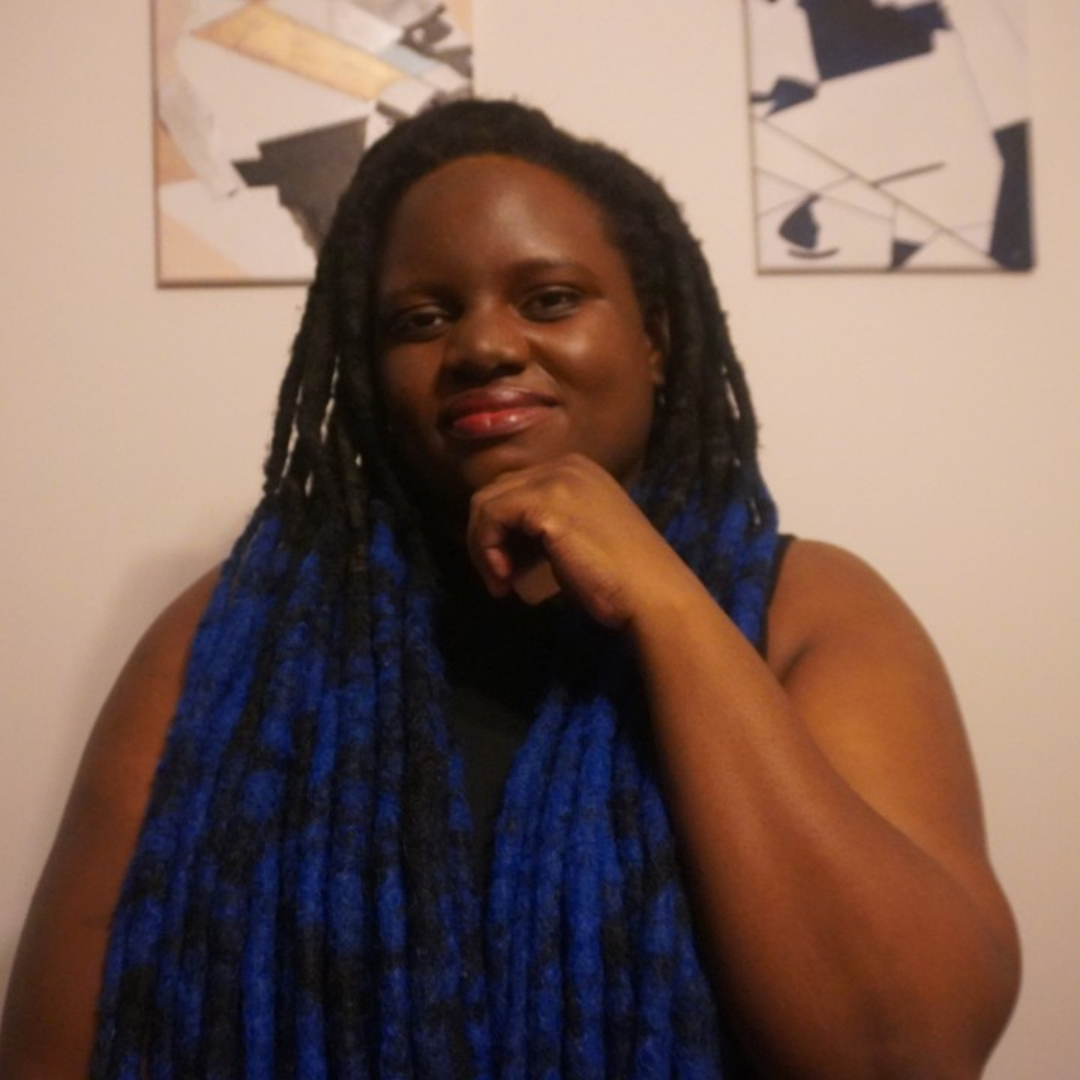
Amanda Tayte-Tait co-hosted the first Bloom Connections Business Clinic with Latifah Abdur. She proposed the Business Clinic after noticing that women regularly had business questions they wanted to explore during Bloom Connections and seeing an opportunity to create dedicated space for those conversations. Her vision was to draw from the expertise already present in the community so women could contribute perspectives across areas such as strategy, marketing, finance and business operations.
During the clinic, Amanda shared perspectives on content systems, visibility, audience research, messaging, ideal clients, revenue, hiring, automation and early-stage business decision-making. She also invited other women in the room to contribute where their expertise could take a question further.
Learn Something. Share Something. Grow Together.
The Business Clinic adds another way for knowledge to move through Bloom Connections. A woman can bring a question she is actively thinking through, hear perspectives from women with different expertise and experiences, and leave with a clearer question, a possible next move or someone she needs to continue the conversation with.
Twenty minutes will not solve everything happening inside a business, and that is not the point. Sometimes progress begins with getting the question out of your head and into a room where other women can help you see what you have not considered yet. That is another way we carry each other further.
Twenty minutes will not solve everything happening inside a business, and that is not the point. Sometimes progress begins with getting the question out of your head and into a room where other women can help you see what you have not considered yet. That is another way we carry each other further.